Thursday, 24 August 2017

Passing Things Down


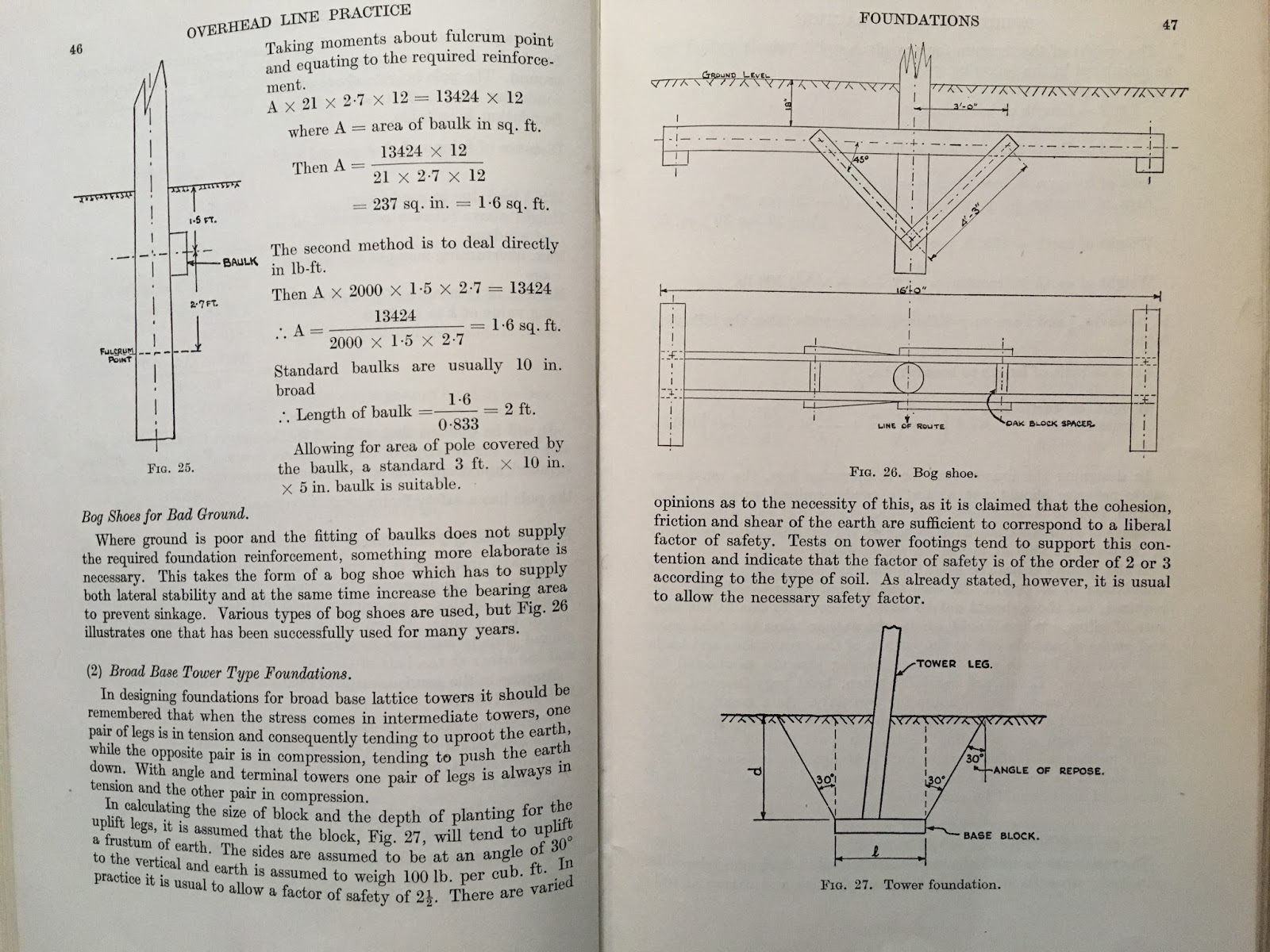
I asked my Dad about erecting telegraph poles, he spent his working life as an electrical engineer and erected a countless number of poles, bringing electricity to many houses for the first time.  He brought me the book above and, strange for him, he asked for it back.  This from a man who has spent the last twenty years getting rid of things; my school books, my Grandad's random collection of objects from his 'tippy bit', Dad is creating empty space, and making sure there is not much to be gone through in the event of anyone having to go through anything.

As he handed me the book he told me that the author had given it to him and then, two weeks later had killed himself.  Dad said he 'committed suicide', guilty of self murder.  Perhaps this event and its impact meant the book could not be given up, the event meant that a space could not be cleared. The book had to remain on the shelf next to Desmond Bagley and Wilbur Smith, it seems simpler than having to go through a process of getting rid of it.

I'm reading a dead man's notes about how to make poles stand up in the ground and it strikes me that he must have been a very practical and straightforward person.  The diagrams and writing are aimed at a narrow and specific group of practical people with jobs to do. Like my Dad giving his early life to bringing electric light to farms and villages across Yorkshire. The books tells us about the ground, the depth of hole, transportation and graft, I see it as the practical side of modernity, symbolised in the vast galvanised steel pylons that divide our countryside.  If my Dad were reading this he would say, "Steve, that's the National Grid - Pylons are distributing high voltage, the poles are part of the 12  KV system - after the substations - it's completely different..........IDIOT."

I think when we build our pirate ship I will spread the poles out a little to create a larger footprint and triangulate.  Standing a pole up on its own with nothing to fasten it to seems to unnecessarily complicate things.  The book is now on my shelf next to Colin Ward's 'Art and the built environment' and Edensor's  "Industrial ruins".  It still speaks of death though, I will be glad to return it.

Thursday, 20 July 2017

Worldizing- outline of a theory of a practice


Good news this week, our application to a south Yorkshire fund was successful, we have £3500 to buy materials to build our pirate ship.  I can't claim the credit for this as the funding bid was a team effort but it's interesting how you need a little bit of a push, a central idea to move things forward.  Funders like to see outcomes, in-fact I like to see outcomes.  The pirate ship above is about what I'm thinking we can make, with some adaptations to fit our needs.  We want a covered place for kids to shelter in the rain and we want some shade in summer.  My mind now is taken up with a circular set of compromises, as the ship becomes a reality it's reality has to compromise to become what is possible, working the constraints of time and energy what is practical.  There is a question that gets asked a lot at art school, 'Where is the work ?'  it's a question that replaces the more easily answered 'What is the work' .  To ask 'where' something is is to position it in a context, it asks for more than a description of a thing it also asks what contingent, on the outside.  
 
The problem is that any physical manifestation that exists within a single point of time and space is liable to become the simulacra of the work, the golden calf, that can be tied down unpicked and assessed against the criteria of other things that are tied down and assessed.  When people ask me what I'm doing at the adventure playground I will tell them I'm making a pirate ship for children to play on.  If they ask me if this is art I will say, I'm an artist, I'm funded through the arts and humanities research council and the building of the pirate ship is part of this project. It's not a real pirate ship though and it's not real art, it's first priority is as a piece of play equipment. On one level to demonstrate that the kids who play here are worth investing in, that play and the imagination are worth investing in.  When I get to work on cutting and bolting and planning, the old bits of my brain will get to work and my nights will be filled with dreams of hammers and screws and work arounds and mistakes and some of the other things that fill my brain  will slip sideways. I will miss appointments in my dairy, I will appear slightly distracted, my brain will be building solutions to problems I encounter and imagine.

Taking stock on where I am in this project is difficult.  I have two strong ideas emerging.  The first concerns the idea of been 'in residence'  and what this can mean and the second is the role of theory in practice. Both these ideas are complex and interconnected. Much of my recent practice has involved bringing a theory lens of some description to my work.  I am now both an artist and a writer and I am jobbing in both.  The point here is to expand on both the idea of been in residence and how it relates the subjective spatially  to the place of residence.  I can describe my practice as a series of adhoc self created residencies across a series of change programs.  I have become by default  a project manager, a writer, and academic an odd job man, a fixer and a worrier.  I worry in both a good way and a bad way,  I think Heidegger on occasion may have mistaken angst for worry.  I am still working on  my idea of the informal residency in your own life as a concept, calling it residency as method worked for a while but I'm not sure this has the legs it needs to carry me very far.  I need to sit and think about this more, I have reconsidered the last 10 years of my work as an artist through the lens of residency as method I can pull from it a lot of moments that sit on a way marker between been 'in residence' and doing a specific job.  The waymarkers across the terrain are not clear.  When you ski into a storm the visibility can get so bad that you have to work from one piste marker to the next.  When it is really bad you have to work to the person in front of you who works to the person in front of them who works towards the piste-marker.  This is how you find your way, up, down, in front ,behind is white everything in all directions is white, yet your ski's take you downhill, you follow other peoples tracks.. 

I'm taken with the idea of worldizing at the moment - it seems to be what is happening with both the making and thinking about art and working with the world of theory within the world.  I don't like to say communities as this closes things down - communities are starting to feel a bit small like enclave or settlements.  The thing I like about the idea of worldizing as both a practical way to work with sound and a metaphor for both residencies and working with theory is that the process allows something to be present but to fade into the background.  It recognises that this is not as simple as it sounds, the dropping away of a soundtrack is not just mixing in something else or lowering the volume, your brain follows this down - worldizing in contrast is about rounding the sounds edges so it sits within the body of the film, becomes part of it. Perhaps this is the practice to allow the art and the ideas to be present within the field and to emerge fully formed and with clarity at the moment when they make some sort of sense of what is happening and then drop away.
 
The great sound engineer Walter Murch coined the term ‘Worldizing’ while working with George Lucas on the Film Amercan Graffiti in 1973. He was Struggling to balance the sounds of Wolf Mans Jacks radio show, playing on young peoples car radios across the city, with the films dialogue.  Eventually he took the sound track out into the street played it through a speaker then re-recorded the sound from down the street whilst randomly moving the microphone.  This process blurred the edges of the sound and allowed it to slip into the background, it mimicked the way we hear things in the world.
Friday, 7 July 2017

Does it matter that it went to sea?


“He found himself in the strange predicament all sailors share: essentially he belonged neither to the land nor to the sea. Possibly a man who hates the land should dwell on shore forever. Alienation and the long voyages at sea will compel him once again to dream of it, torment him with the absurdity of longing for something that he loathes.”

 Yukio Mishima       The Sailor Who Fell from Grace With the Sea

Does it matter that it went to sea and steered a ship of considerable size from continent to continent? Does it matter that it experienced storms and the people around it feared for their lives grasping it's handles with assured skill and strength ? Does it matter that it smells of salt water and the years of use has opened it's wood-grain, soaked in the sweat and grime from dirty work-warn hands.  If we are to make a pirates ship to carry us into an imaginary sea then the past life of steering a true path may impart a degree of authenticity.

 When steering a ship, the  wheel has a delayed response and the captain must always remain vigilant and prepared.  She has an intimate and close relationship to the object, like a musician and an instrument or a photographer and a camera.  The body connects to certain objects in a more specific way, it extends the person into the world. Of all the parts of a pirate ship that need an element of authenticity, the wheel is the most important. Our ships wheel, salvaged from the world of antique maritime memorabilia will be liberated and again help us navigate  complex journeys within the sea of imaginations.

Wednesday, 28 June 2017

making things safe


It's been a month since I wrote anything here, partly due to the fact I could not think of what to say and partly as I have been away to celebrate my 50th birthday in Sardinia.  Before I left I continued to repair equipment.  I triangulated the Arial runway and re-decked the worst of the rot on the castle.  I also applied for some money to buy materials to build a pirate ship.  Money is on everyones minds at the moment we have a shortfall and a couple of unsuccessful applications.  There has also been trouble down the road.  Iron bars and guns and rumors and truths and turf wars and class wars and race wars - everyone is feeling unsettled.

I had a certain clarity of thought when I began this blog and I've realised that clarity is not always a good thing, I spend most of my time in a muddle jumping from pillar to post.  The good thing about working on equipment at the adventure playground is that it ties into a simpler time for me and it really is something I am able to do.  Not that the skills required are that specialised but there is a certain finess that comes from experience.  The over engineering, the bolting through and the aches and pains from drilling and sawing at difficult angles up ladders and behind your head.  People rarely recognise the importance of triangulation, the power of the wind and the way that young people read challenge - what they are capable of.  I'm no expert but the great thing about doing something so specific is there are very few experts and with my strong hands, risk adverse disposition and tendency to over engineer I am supremely suited to this type of work.  I have enjoyed getting dirty, the small splinters and cuts, the realisation that the hard skin on my hands, grown through years of building, making and working had gone a little soft.  There is something familiar about returning to something you know, it makes you feel at home in yourself.  Laying in a hot bath, drinking a glass of beer and soaking out the stiffness in the muscles is something I had missed.

This relationship to making and value is something that runs very deep in my history, the solving of the immediate problem of making something safe seems like the best way to approach any type of work, practical pragmatic and worthwhile, this is my sense making I will find more things that make sense.

Tuesday, 23 May 2017

Making a sign


This week I didn't really get much done.  After buying some wood with Patrick I started to re-deck the platform on the old Castle structure.  Then on Thursday some volunteers came from 'Children in Need' and helped dig out an old tree stump and screw some decking boards down.

It was one of those days like many days making things that you only really get to see what you have done in a cumulative way.  It's like clearing a big garden or renovating a house, a full days work hardly touches it.

I am also struggling to be poetic today I think there is a story about every animal having a certain number of heartbeats.  A mouse for example has a fast heart beat and lives a relatively short lifespan.  A tortoises heart beats really slow, like six times a minute and it lives forever. Darwin apparently collected a Tortoise called Harriot in the Galapagos islands in 1835 and it lived until 2006.  It appeared on Blue Peter when I was a kid I remember thinking at the time that it must have a really slow heart beat to live that long but the heart beat thing isn't true it's a made up fact.  The thing about poetry is true though because normally I could say something now with words that would make me feel connected to time and heartbeats but today I have run out of poetic writing. I am like an ancient tortoise and my heart is barely beating but I will live for a long time like Harriot - perhaps to much poetic nonsense can speed things up and kill you.

I am almost tempted to get practical now and think about the artists role in social cohesion, perhaps it is all this talk of Darwin and evolutionary theory.  Historically I always preferred Erasmus to his grandson Charles; Erasmus leading figure in the lunar society, poet scientist poly-math Lunatic  but some days the scientific drive in me to find some glimmer of truth  within a given situation makes me want to take my killing jar and pin something down like a dead butterfly or an idea.

For the record I bought some wood and we had to cut it to fit in the car.  Then I helped to build a big sign that read 'Thank you children in need from Pitsmoor adventure playground' then I took my best camera and took a photo of our volunteers from all over the north holding it up in-front of our dinosaur  aerial slide. I did this because I thought the image would get used and it would promote us nationally.  I took a step away from mending things and did something to look after our funders and raise our profile.  This is one of the things I think I have learned from working in communities but perhaps it's like the speed of an animals heartbeat and doesn't have that much to do with anything.

Monday, 15 May 2017

On Death


I have struggled to write about last week at the adventure playground.  I walked the dog in the cemetery before I went to work and bumped into two armed police officers.   They were looking for someone, there had been a shooting the night before.  As I walked around a company were renovating a grave.  Among the headstones that had tumbled in to the spaces left by decaying coffins, fresh cleaned white marble and new flowers, the fresh stone chippings raked like a small zen garden in a world of old decay.

When I saw the grave it reminded me of  Steve Mcqueen artwork 'Ashes' which I saw in 2015.
Macqueen says-

" The only doctrine as an artist is not to allow the dust of the past to settle."

 The work is a screen with two sides on the first is a short film with audio interviews documenting the death and re-burial of the Ashes a beautiful young Grenadian man. The other side shows Ashes sat in the front of a fishing boat, captured on flickering super eight footage in 2002.  Ashes is ultimately himself, individual, vital and alive he is also every young man who dies in violence.

We meet at the playground with Kate and John Diamond and each of us tells our story of the nature of where we are.  The person shot in 96 and taken to hospital.  The death of Venom at the Nottingham cliff park, the armed police sweeping across the bank and all our children bunkered inside the adventure playground castle.  This is our narrative and our counter narrative but when I think about it now I just see dead boys and grieving parents and waste.  I have heard and told these stories many times but I'm not sure what purpose it serves, certainly not a humanising cautionary tale for the victims and the perpetrators of these crimes seem to occupying a parallel world that like a river on a chalk down can vanish for years and flow underground emerging occasionally to remind us that the dust of the past never really gets washed away. 


"I know Ashes as a friend. All of us were young, man. We grew up in one neighborhood. So, it's like we used to live in a ghetto. You understand. All of us dive together. Going fishing, diving, you know, everything. But you know, Ashes is a good guy, a brilliant guy in the ocean. You understand. But with this thing with the drugs thing there, I don't know where he found the drugs. I didn't know. He come out from the island, I just came from school in the evening, cleaning the house. And he came and he walk into the house with all the wet clothes on him, all the sand on his feet, and I ask him 'Ashes, I say what kind of thing is that? Don't you see I am cleaning and you just walk in like that?' He say 'right now, I am rich, I can do anything'. So I turn to him and my next friend turns to him and asks him 'well what?'. He turns and says, 'we found something on the island and we can't spend the money now'. So Kevin turned to him and says 'well just give it back'. We never knew he had found the drugs. You understand. But we go out as normal. And until we, till we hear other talk that they were camping in Isle de Ronde, you understand so they were going below the land, to behind, for the fish and they saw some drugs on the beach, so they saw it and nobody was there so they took it. And then things, some guys came investigating, finding out who is Ashes, who is this, who is that, you understand, who are the other guys. Then they kidnap one guy, I think the one guy say they beat him. So he had to talk for his life. So he talk and he sell out them others. And then they keep one guy, go with him in the van, they drive him around and they ask him to show them who is Ashes. So then the guy shows them who is Ashes. The night we sat down by the bus terminal and somebody came in and say 'Ashes, I just pass some guys in a car asking for you, you know' and Kevin says 'well if so, Ashes you better come out on the road now'. He says 'Man I don't really care you know'. When they came for him they said 'come let's go.' He says, 'I'm not going anywhere with all of you if you have to kill me, kill me here in me people's presence for them to see, I'm not going anywhere' and then they shoot him in the hand for him to let go of what he was holding. And when they shoot him in the hand, he let go but he tried to run and then they shoot him in the back and when he fell one of them guys went over to him and shoot him up around his belly and his legs and thing. And that was about it."

Sunday, 7 May 2017

In order to keep on top of things


Friday .  I am reluctant to write today, it is sunny outside and Patrick and Pete have just gone down the pub for a pint.  I have had a day of writing and staring at a screen.  I don't feel like I have got very far. I will leave it here.

Sunday - picking up the thread. On Tuesday spent the day at the adventure playground.  In the morning I mended the aerial runway which was flexing in the ground as young people slid along the zip wire.  Patrick went down it to test it for safety but I wasn't sure if this type of stress test was effective as I suspect it just weakens everything and one day it will just go TWANG and fall to bits regardless of the size of person in transit.

I dug a large trench across the front and braced the structure with some scrap timber. At about 18 inches deep I hit a seam of coal.  Black flaky stuff not suitable to burn but very near the surface. As I got a little deeper I hit ganister.  I remember my friend David Walker Barker  explaining that it was the material that people made crucibles from, I had forgotten what it was called so I emailed him - here is his response,

'It was most likely ‘ganister’ Steve, a deposit rich in silica that made it suitable for making crucibles. It lay directly beneath coal and is sometimes referred to as ‘seat earth’ being the sedimentary deposit formed of remnants of the roots and sediment that the trees that formed the coal were originally rooted in.'

The history under our feet was so easily exposed and provided a poetic and literal link to the city's history yet as I dug and talked I felt my own history unearth itself and this was not such a neat and symbolic metaphor.  It felt like the things that are hidden below the surface of living in a place that has witnessed a history of violence requires both a denial, in order to continue living here, and an acceptance that things will be repeated.  The coal and the ganister are poetic and beautiful reminders of a history that is falling from living memory.  The other reminders of young men's bodies, broken childhoods, the struggle to be seen, the wars people have escaped from and the wars they have created are not as easy to cope with.

I am left today with a inner recognition that this place is not straightforward and by defintion parallel lives are lines that never meet. The playground is a point of parallax a good place to look, like the pirates of our pirate ship with one eye, keep the other over your shoulder and sleep with it open.  Like the coal and the ganister, history is close to the surface.